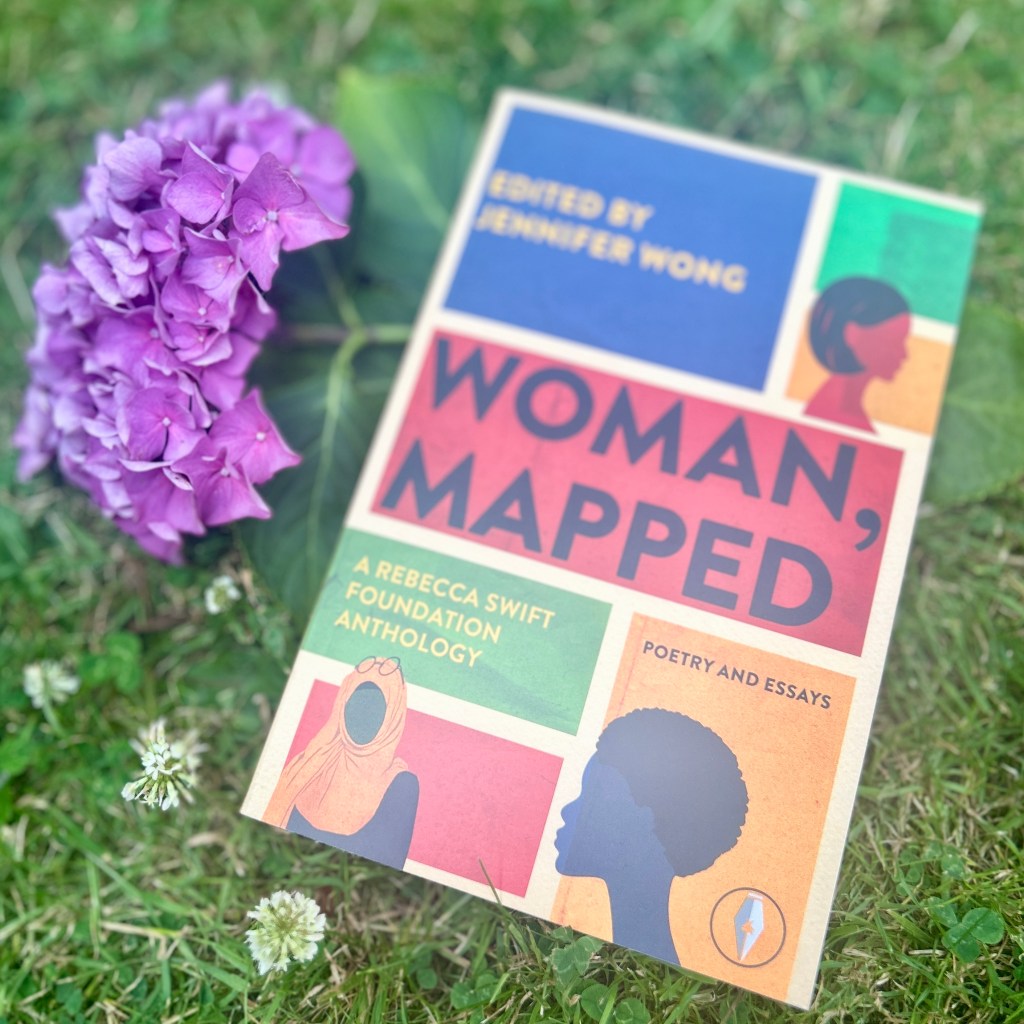
This week, an essay of mine (“Woman Poet Demolition Land” ) was published in Woman, Mapped, a new anthology from the Rebecca Swift Foundation and Fly on the Wall Press.
In it I write about what it means to become a woman and a poet in landscapes shaped by class, redevelopment and disappearance. For a long time, the essay was just notes on my laptop. Before that, it was a collection of thoughts, memories and half-formed sentences I kept circling around. Before that, of course, it was my life.
Now it is in an actual book. It has a page number. My name is in the contents. Other people can read it without me standing beside them explaining what I meant, which is both the point of publication and also quite alarming.
When I write poetry and fiction it gives me places to hide. I can come at something sideways. I can put an image in front of it, leave a gap, trust the reader to feel what is moving underneath. I can write about one thing while also very obviously writing about another thing.
An personal essay is harder to duck behind.
I am there on the page in a more recognisable shape, even when I have decided what not to include. And I did decide what not to include. Writing personally does not mean handing over the keys to every locked room. But publishing an essay is more like saying: this is where I was standing. This is what I could see from there.
That is part of what I like about the title Woman, Mapped. A map sounds authoritative, but it is really a set of choices. What gets named? What gets made large enough to notice? Which routes are marked, and which ones vanish into a blank bit of paper?
Lives are like that too.
Some parts of a woman’s life are treated as central and others as incidental. Class, housing, motherhood, work, redevelopment, memory and the slow business of becoming a writer: all of it shaped my ground, but not all of it tends to make it onto the official map. Writing can be a way of going back and adding a few missing landmarks. placing a pin in the map and saying: something happened here. This mattered. It may not have looked important from the outside, but it changed the route.
My essay now sits alongside work by other women, all mapping different kinds of territory. I like that there is no single, smooth version of womanhood running through the anthology. It is messier and more interesting than that.
Later this month, I’ll be going to Manchester to read at the launch.
For now, though, I’ll keep looking at the contents page.
There is my name.
There is the title of the essay.
There is part of a working-class life that, for a long time, existed only inside me and in the places that made me. Perhaps someone with a life a little like mine will see it there and recognise that their own experiences are not too ordinary, too messy or too far outside the usual story to be written down.
It is not a complete map.
But it is there.
You can find out more about Woman, Mapped — and order a copy — here.
I also spoke to Fly on the Wall Press about the anthology and the essay, which you can read here.

